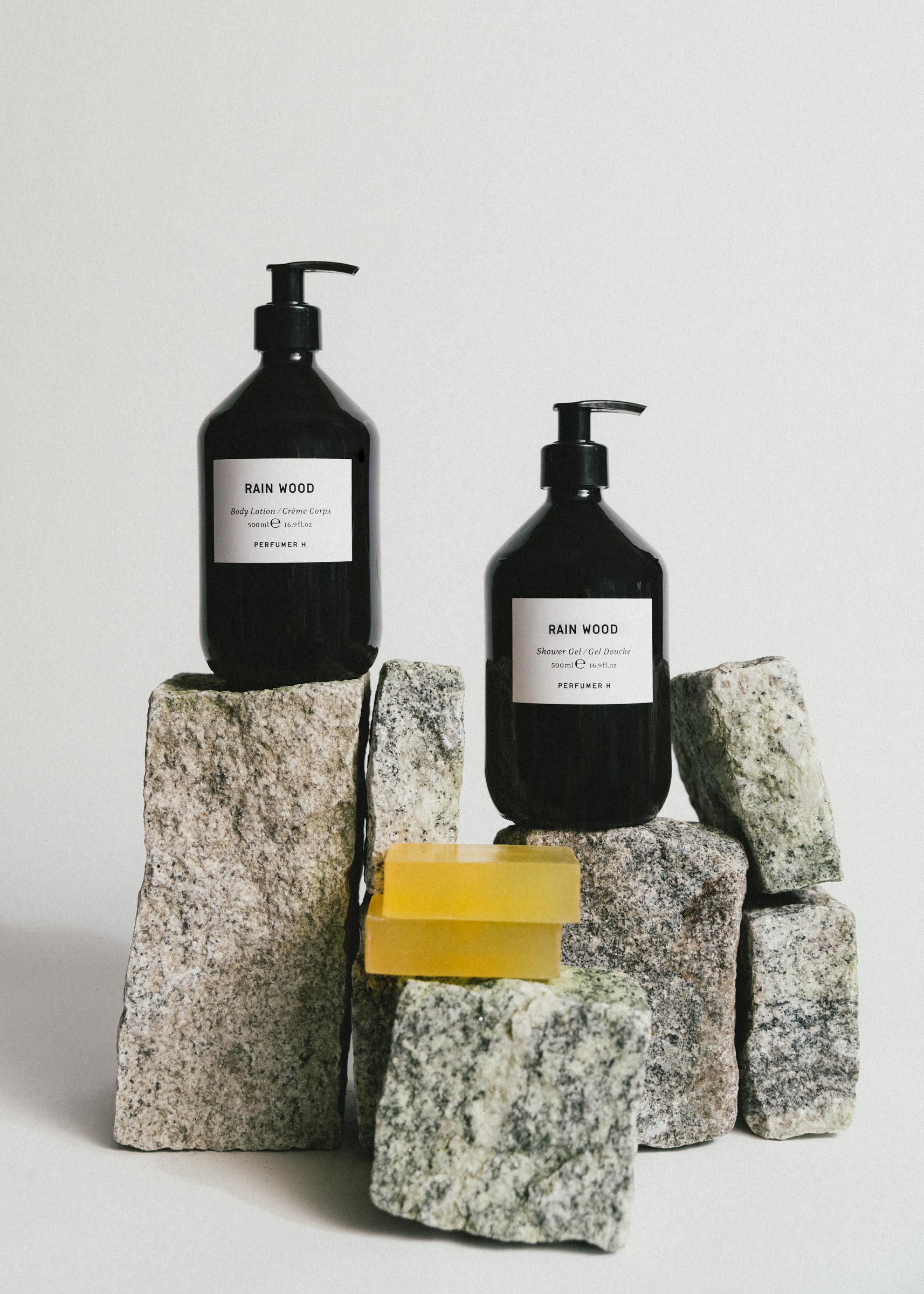
Because We Smell Good | Oct 1, 2025
Scent and Sensibility
Because It's Festive | Oct 28, 2025
No Brainer Stocking Stuffers (already!)

Female Founded | Oct 10, 2025
Female Founded: Smooch Body

Our Better Nature
A breakfast at the Collect Art Fair celebrates two biophilic artisans
To kick off this year’s Collect Art Fair, Skye Gyngell's restaurant Spring hosted an elegant breakfast, bringing artist Paola Di Legge and Spring pastry chef Giovanni Segantini into conversation on the rhythms of the natural world.
In case you aren’t familiar, Collect Art Fair is one of the world’s leading fairs dedicated to contemporary craft and design. Unlike many biennales or art fairs, the works exhibited at Collect are available to purchase, ranging from £500 craft objects to £50,000 jewellery pieces for the more ambitious buyer. Featuring more than 400 artists represented by galleries and institutions from across the globe, the fair offers plenty to captivate seasoned collectors and design enthusiasts alike.
Over a delicious breakfast of lemon-curd pastries, fresh fruit and berry muffins at Spring, fair director TF Chan hosted a conversation between Paola Di Legge, who is exhibiting at Collect with Design & Crafts Council Ireland, and Giovanni Segantini, head pastry chef at Spring. Both draw deeply from the natural world in their respective practices: Di Legge creates sculptural works from preserved mosses and amaranth sprouts, while Segantini crafts meticulously composed pastries that celebrate seasonality, texture and flavour.
Because caught up with both artisans after the breakfast to discuss their individual practices and the ways in which nature informs their work.

One of my favourite pieces from the Collect Art Fair, Murmuration by Emer Roberts

Tell me about your background in textile design and how that led to where you are now.
Giovanni Segantini I moved to London to study textiles and screen printing at Central St Martin's. After I graduated, I worked in the textile industry for a while, but I just didn't feel satisfied in my job. I always knew I wanted to make things with my hands, and I felt like that wasn’t translated in the reality of my job. I’d always had a connection with food from a young age, so I applied to restaurants and I’ve never looked back.
Fruit and vegetables are often naturally wonky and imperfect, yet you are trying to bring in a great deal of detail and precision in your preparations of them.
Giovanni Segantini More often than not, we prefer it when natural elements such as fruit and vegetables are imperfect in their own way. We teach chefs to plate thinking about the individual leaf that they are using. There's no exact format to replicate: no plate will look the same. There are other occasions where we have access to a glut of perfectly ripe peaches and they will all be as similar as possible. In those cases, we go for perfection and repetition. It’s a balance of both ideas. It's not an easy task sometimes, because produce is ephemeral. Preservation is a big part of how we work here: in the summer, we preserve a lot of fruits, which we utilise through the winter. It allows us to have a beautiful raspberry ice cream in the height of December.
How are you thinking about the other sensory elements in your creations beyond taste?
Giovanni Segantini No one wants to eat one-dimensional food: distinct textures are essential to the joy of eating. Aroma is also really important. We have the luxury of having access to a lot of leaves and aromatics that surround the fruit plants themselves, and we incorporate these into our desserts to add another dimension to them. Adding, say, peach leaves or different kinds of flowers adds different flavours and profiles to our desserts. It can be challenging to create as many dimensions as possible within a plate, but we try as hard as we can.
So much of the produce that we get in the UK has been picked unripe and is artificially ripened, whereas Spring works directly with biodynamic farms, ensuring the ingredients are at their best. Does this add a sense of urgency to your work, the knowledge these ingredients will need to be cooked and eaten as soon as possible?
Giovanni Segantini Part of that is the result of the core relationship we have with the two biodynamic farms we work with. Jane Scotter, who’s the head grower, is an expert in this: she has decades of experience in knowing when a raspberry is perfectly ripe. We are extremely lucky to be reliant on that expertise. In some periods, especially in the summer months, it can be difficult as you have to make something out of it immediately. I can never fully explain to someone the experience of picking a strawberry from the vine and putting it in your mouth when it’s been warmed by the sun. So many people have never experienced that, and it’s such a shame. I want to try to transfer that experience to as many people as possible.

A selection of Spring's delicious pastries
Your practice looks to preserve moments of natural beauty, moments of flourishing.
Paola Di Legge It's amazing how every flower and every leaf I work with is different: I think there is this subtle communication with nature itself in my practice. The amaranth really allows me to work more sculpturally. They are so tiny that they allow me to really “design” the piece and convey movement. Mosses tend to come in bigger chunks, and they have their own story to tell. There is always an interconnection between the form and the material. I made some pieces with a few weathered pieces of cork bark that were pressed so they looked like a very flat surface. For me, it was beautiful: it was about appreciating the imperfections in nature that reflect the imperfections in our lives as well. I called those pieces “Ageing with Grace”. When you also explain to people the intention and the way you see the world, they might see it in the same way.
Your pieces give such a sense of time, almost geological time. How long does an individual piece take?
Paola Di Legge The piece we made for Collect is about 70x70cm and took about 80 hours. I wanted to get a sense of time in it. It was about putting really small pieces one by one, gluing them, making sure the glue was strong enough. From a hand-crafting perspective, it was really delicate. I enjoyed making the base of the piece, which is very three-dimensional, because it reminds me of the uniqueness of how landscapes alternate in the natural world.


Stillness in Motion (2026). Photographer: Paola Di Legge
How do you incorporate storytelling into what you make?
Paola Di Legge With certain pieces, I have a design in mind and start making, but things will change along the way. The first piece that I made was in 2020 during Covid. It was that time when all the streets were empty and where everybody was feeling this sorrow. I had this idea that we are all interconnected: when a pandemic comes, whether you are a billionaire or homeless, you are facing the same situation. The first piece has a sense of movement and lightness which is a reflection of the interconnectedness of all things.
There is a strong spiritual sense to your creations. How does it feel when you have to take these very delicate artworks to market?
Paola Di Legge Some of these pieces I feel so attached to, I keep them in my home. When I sell them at the fairs, it’s important that the person really engages with the piece. One time at a fair, a man looked at my piece several times but didn’t buy it. He came back the day after and offered to buy it for a discounted price! It was already sold, so it wasn’t even available, but he asked me for a commission and I said no. I felt that was not the right customer for the piece. You've missed the point! Still, the majority of the time, I am happy that the piece goes to the person who buys it, because I can sense their appreciation and respect for the time that went into the piece.
Discover Paola's art here.